This project was my Unreal Engine 5 recreation of Atari's Combat for Duke's Software Engineering for Game Development course. Alongside rebuilding the original tank gameplay, maps, and bullet types, I expanded the project with a final-project mode called SUPER TANKS that adds powerups and Pac-Man-style tunnel passthroughs.
Classic Combat
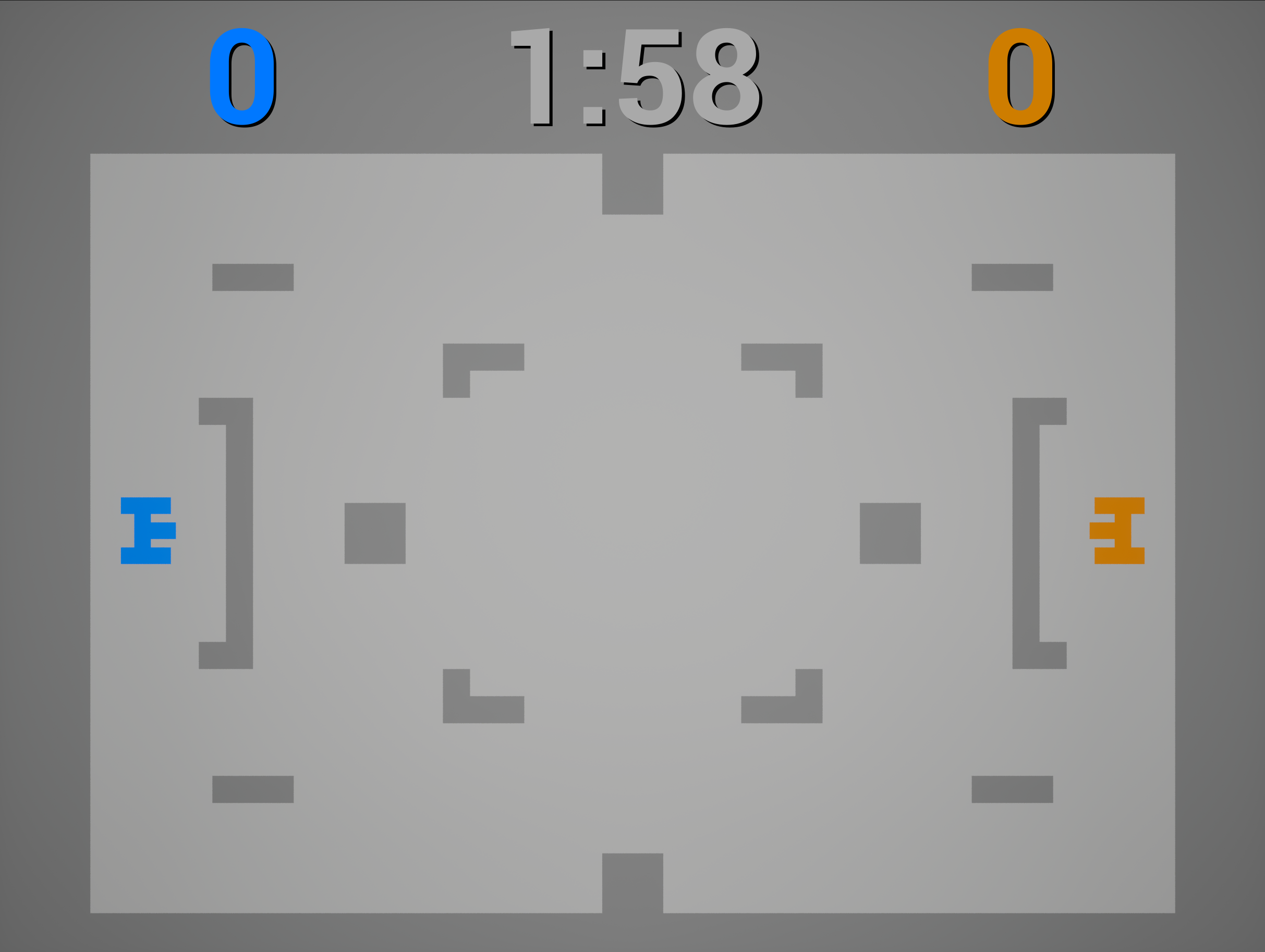
Battle it out in this Atari-style game of Combat! Currently showcasing the "Aperture Science" Color Scheme.
Shields
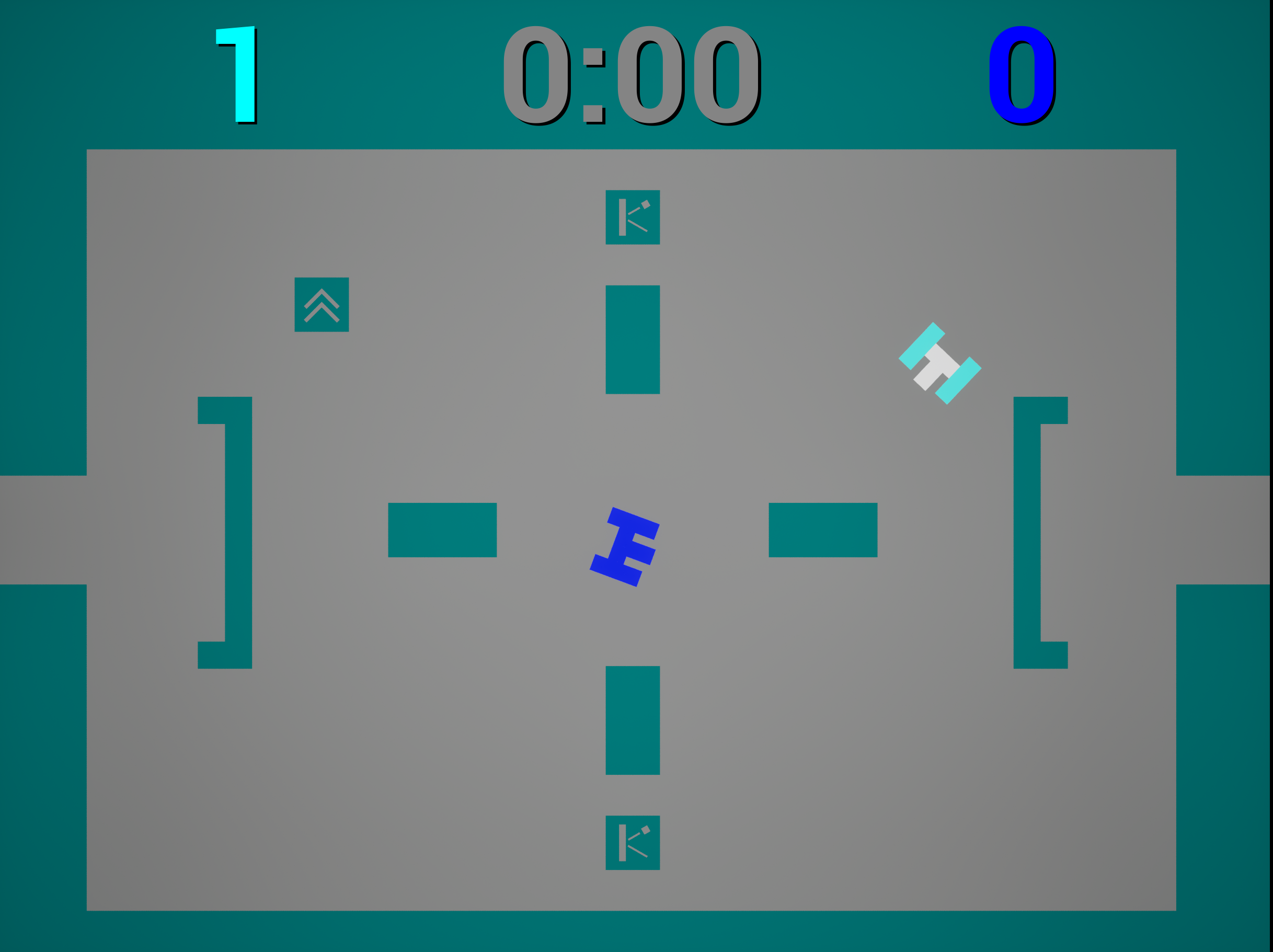
Protect yourself! Super Tanks offers a variety of power-ups to shakeup the match. Notice how the Cyan Tank (Player 1) has a white body, indicating that it has a Shield PowerUp. Also notice the passthrough on the left and right sides of the map. Showcased in the "Cyan" or "Teal" color scheme.
Speed Boosts
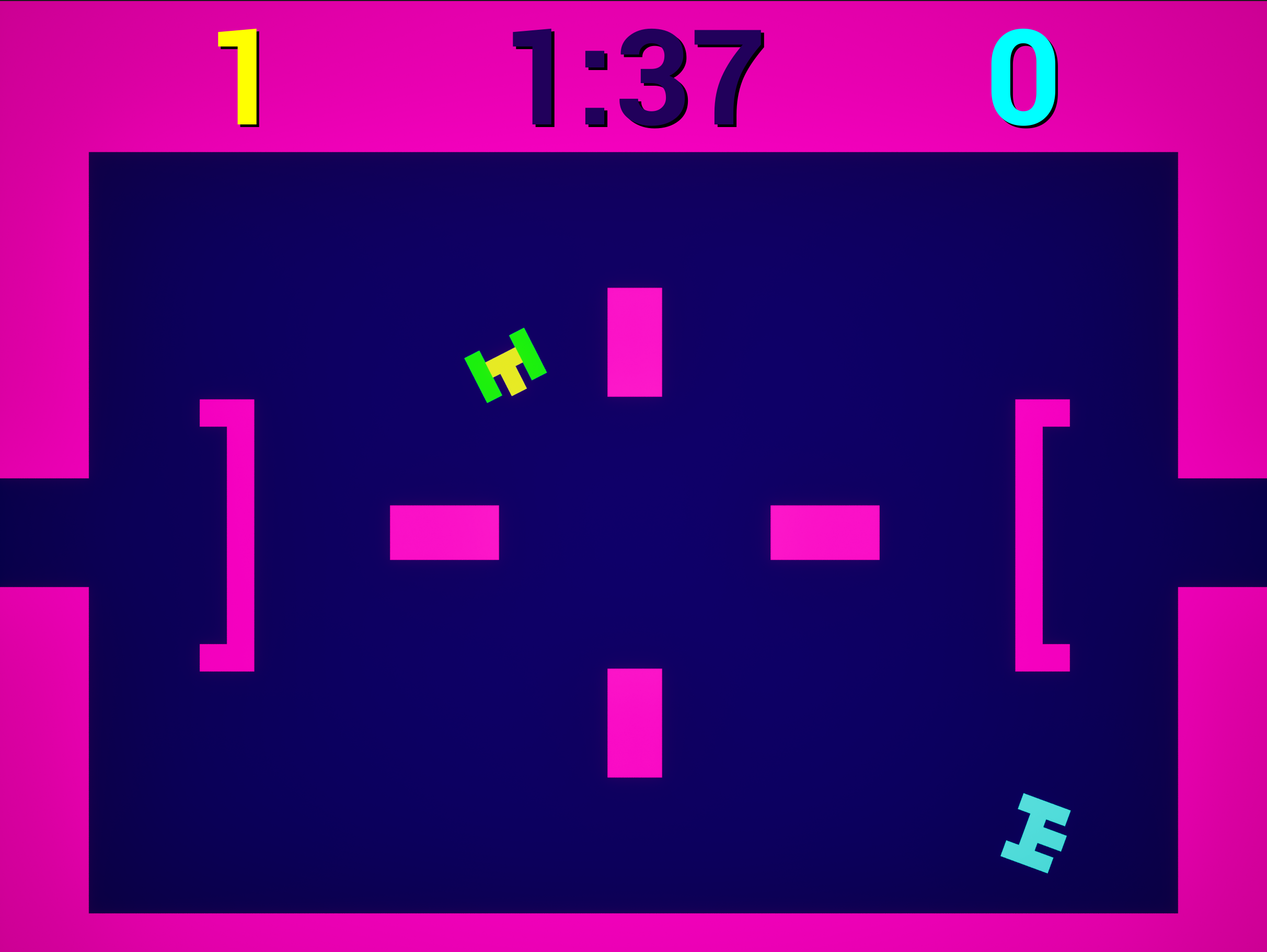
SPEEEEEEED BOOOOOOST! Notice how the Yellow Tank (Player 1) has green treads, indicating that it has a Speed Boost PowerUp. Showcased in the "Neon" Color Scheme.
Cooldown
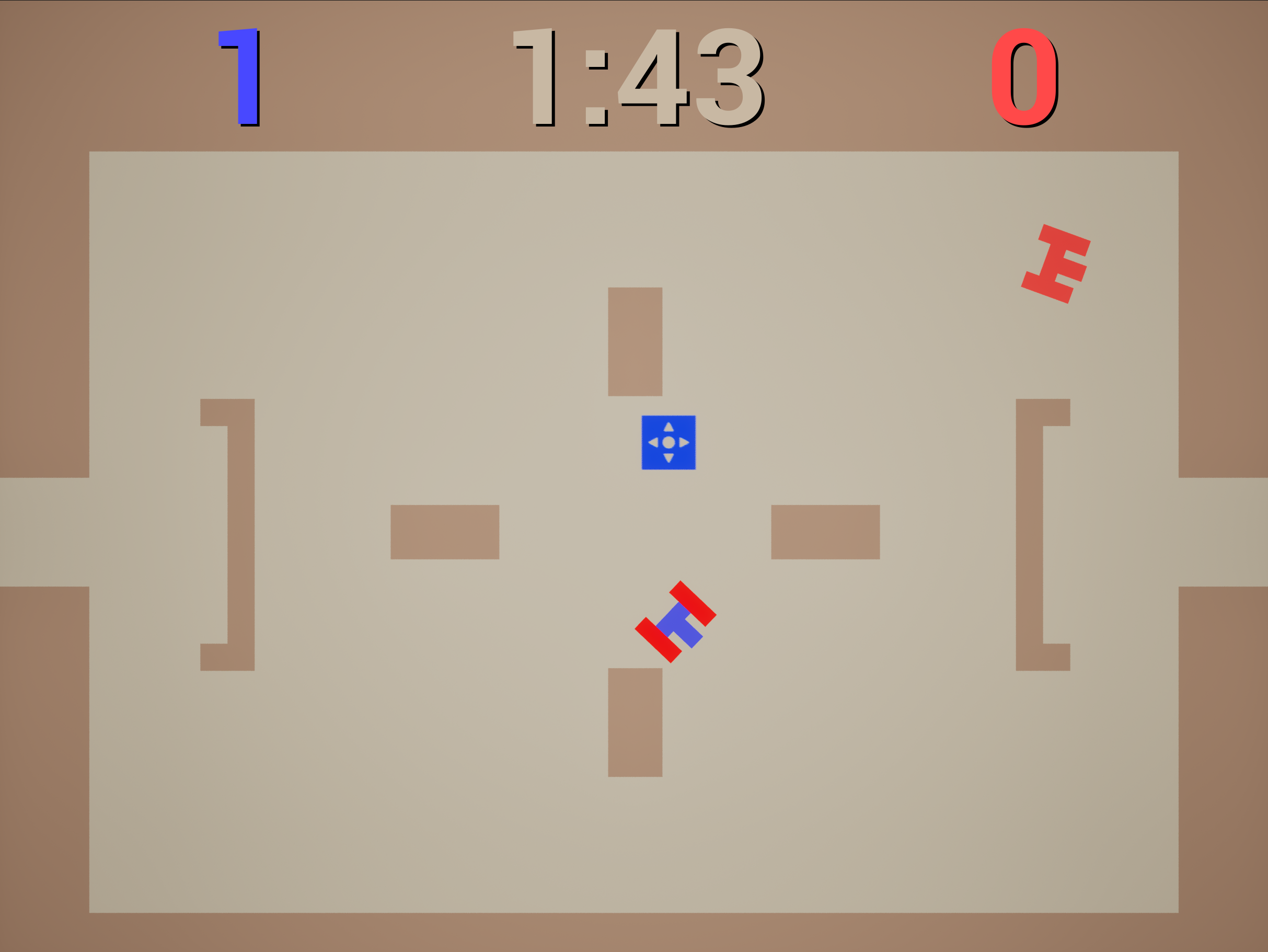
Not so fast! Shooting an enemy leaves you on a brief cooldown while you respawn, ensuring a fair match! Notice how the Blue Tank (Player 1) has red treads, indicating that it is on Cooldown after shooting and hitting its enemy. Showcased in the "Wii Play" Color Scheme.
Development Process
I developed this over the Spring 2025 semester as a course-long build, with each assignment feeding directly into the next milestone. That structure made it a great exercise in iterative development, from recreating a classic game's core feel to extending it with my own mechanics and presentation.
Key Takeaways
- Unreal Engine is not just for hyperrealistic FPS games - While incredibly powerful, Unreal Engine can successfully be used to create easy-to-process, lower-scale games. While we didn't touch on Shaders during this course, we still saw a creative way to stray away from the expected realistic visual style that is default for UE games.
- Don't compare your current game to the final product - When the final vision for the game is very concrete (e.g. like when making sequels, remakes, remasters, etc.), it can be easy to constantly compare your current game to what is expected and be discouraged by how different they look. Keep in mind the stages of development and that a game may not resemble what it's supposed to until the very end.