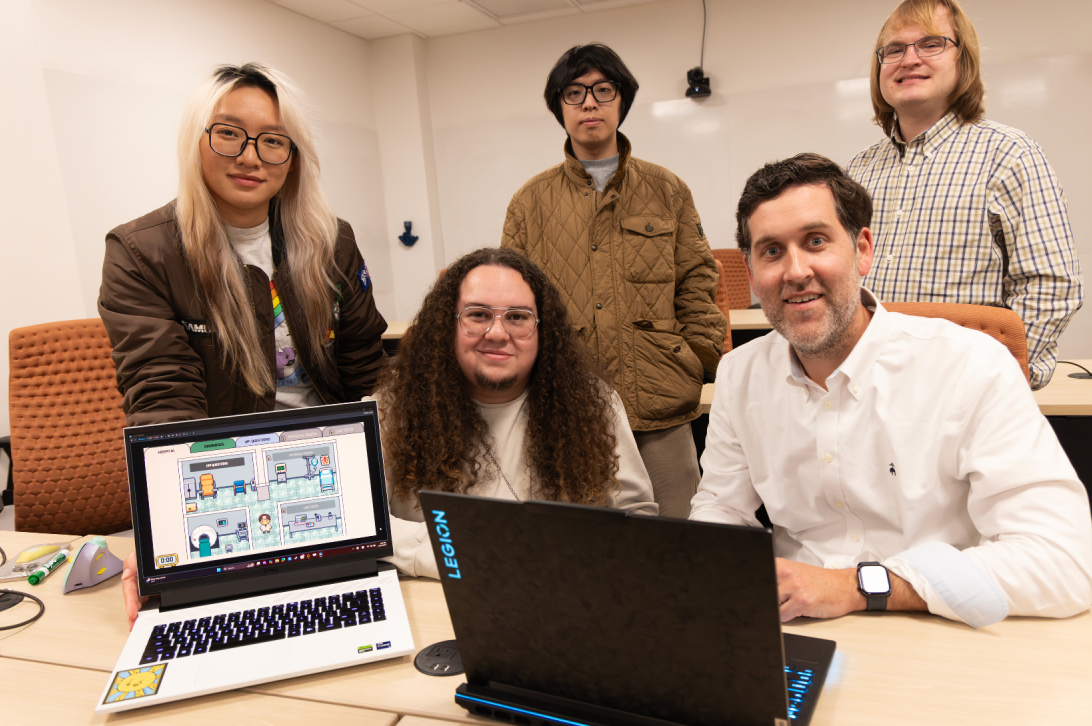
Pick-5 is a serious game built with in collaboration with Duke University School of Medicine to train medical students in diagnostic reasoning. My team and I adapted an existing paper exercise into a Jackbox-style multiplayer experience where teams move through history, physical exam, and lab-test phases before presenting differential and final diagnoses for post-game discussion with doctors.
Pick-5 is not playable by the public as it is an internal training tool for students attending Duke University School of Medicine.
Game Details
My Role
Client Contact Lead, Gameplay/Data Developer, and Programmer
Genre
Party/Trivia-like Serious Game for Medical Training
Platform
PC
Development Tools
Godot, GDScript
Key Features
Effective training tool for medical diagnostic decisions
Multi-phase gameplay played in Jackbox-like sessions
Zhao Jin (Gameplay Lead, Networking Developer, Programmer)
Visuals & Media
Promo Video
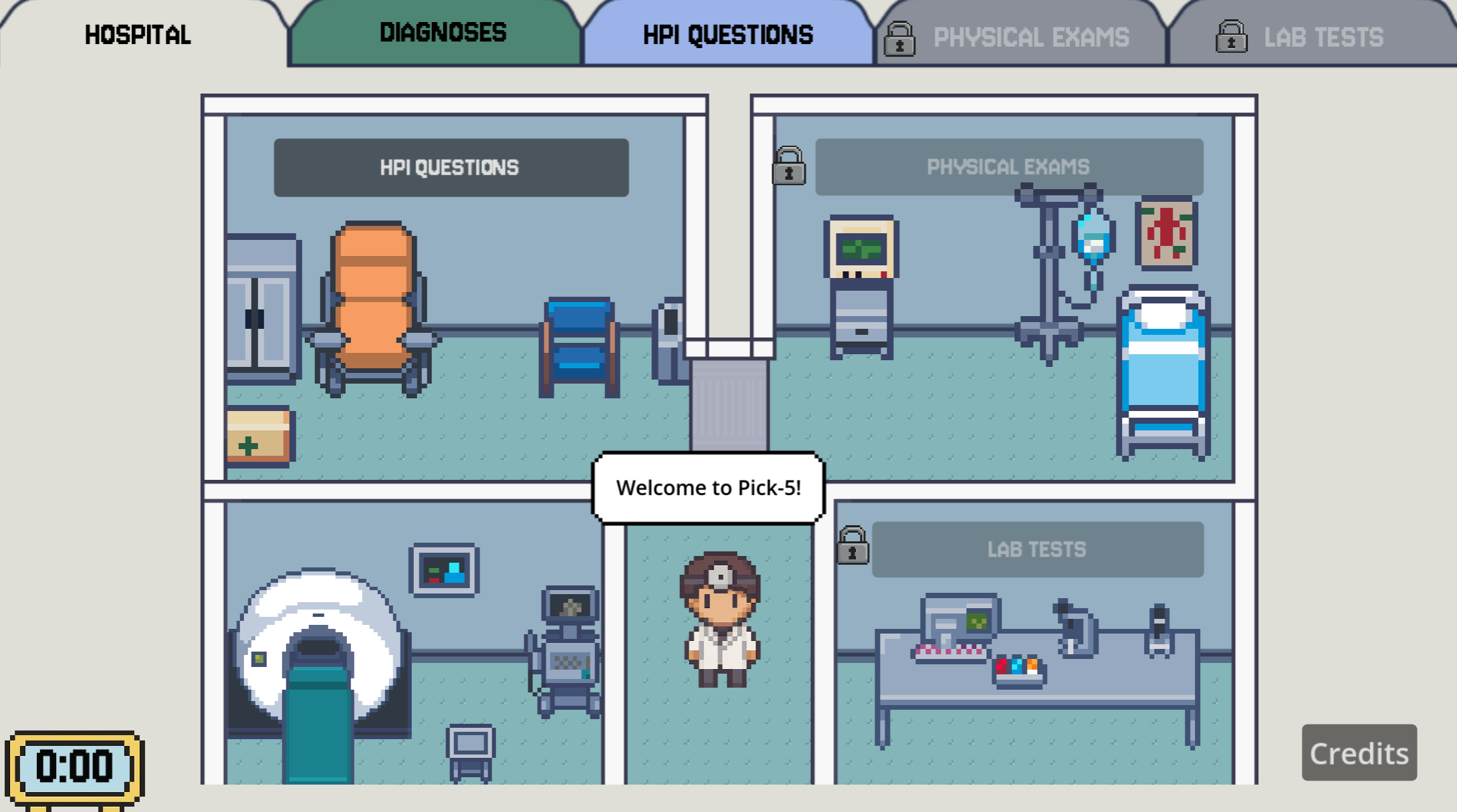
Hospital Scene
This is the main scene of the game, where players can access all other unlocked phases of the game. They may also use the tabs at the top of the screen.
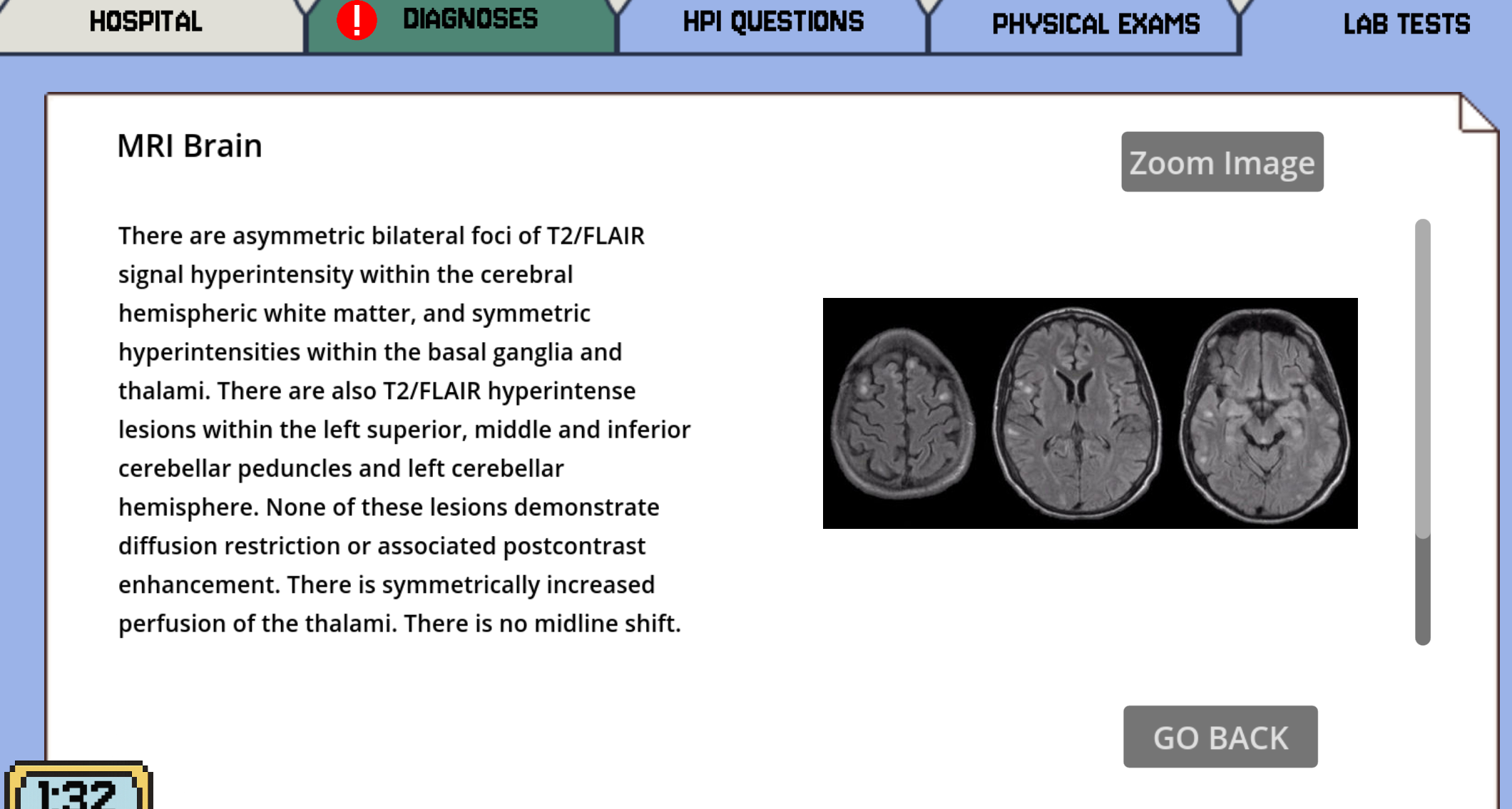
Lab Test Result
This is one of the player-side views during gameplay. It is currently Phase 3, where players have already picked 5 labs and imaging tests and are now viewing the results of one of their choices, a Brain MRI. Some results allow for visual aides, figures, and images.
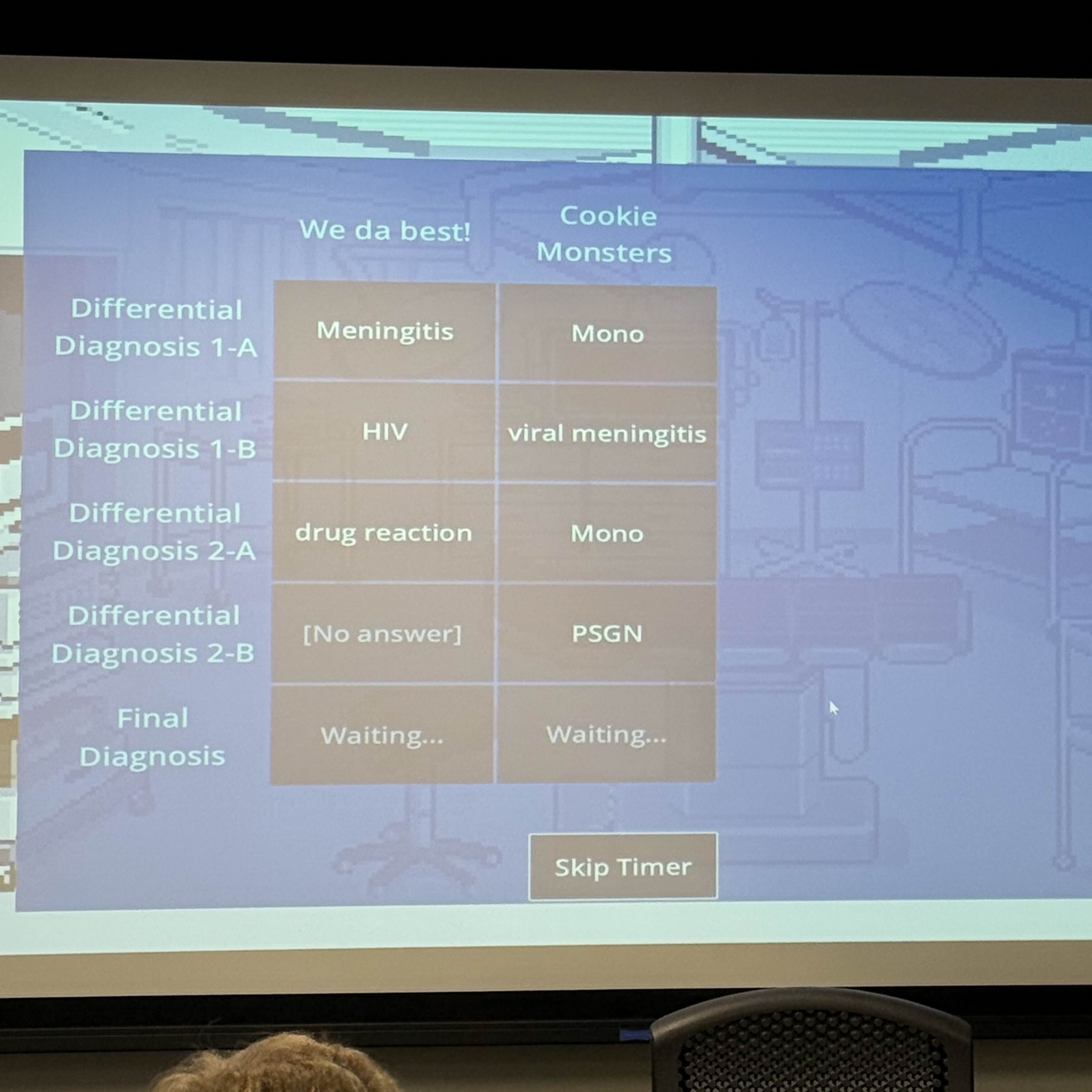
Differential Diagnoses (Host View)
This was captured during one of our playtests with real medical students from Duke University School of Medicine. This screen shows what the host sees during the game: a readout of each team's differential diagnoses that gets filled out as the game progresses.
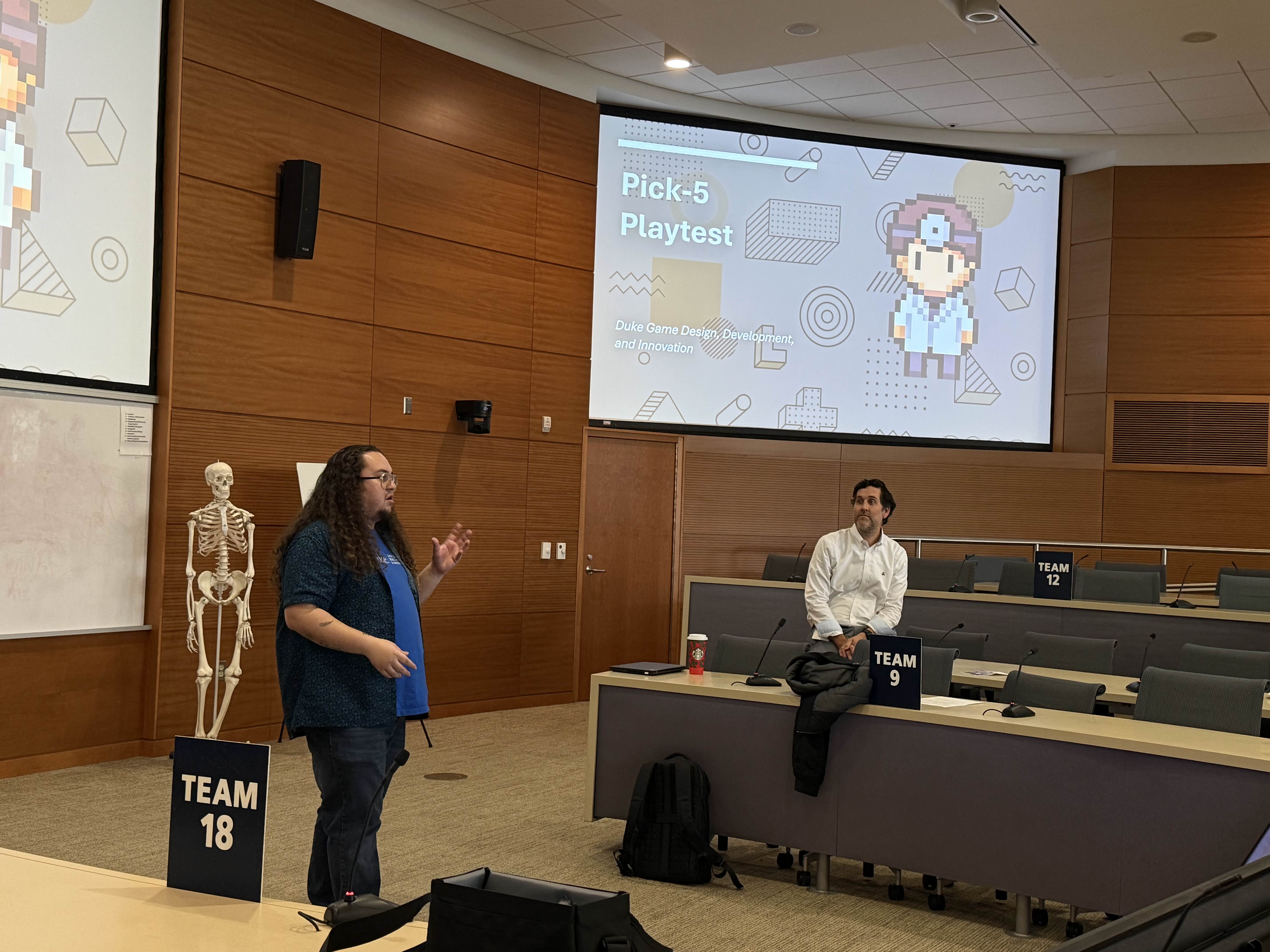
Playtest
This image depicts me presenting our game before our first group of playtesters finally gets their hand on the game. Also pictured is our client and original creator of the paper version of Pick-5, Dr. Mark Chandler.
Development Process
We developed Pick-5 across the Fall 2025 semester in close collaboration with our client, Dr. Mark Chandler, and the Duke Hospital context shaped every design decision. The challenge was not inventing a new game from scratch, but translating an already effective training exercise into a cleaner digital format that preserved its educational value while improving flow, readability, and replayability.
Key Takeaways
The importance and true purpose of Serious Games - Gamification is a powerful tool for creating memorable experiences. It is important to wield these tools wisely so that the players can have an unforgettable experience when playing, which is more important when the objective of the game is to learn, train, and improve.
Don't devalue adaptations - Just because something in your game exists prior to development, doesn't make the final product any less your own. It is a magical feeling to convert an established gameplay loop into something it was never meant to be, and have it turn out better than anyone ever thought it could be.